
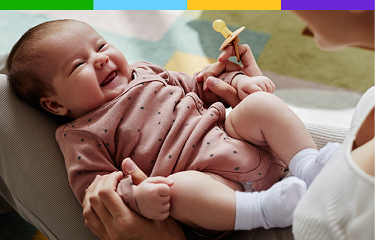
Start strong with routine checkups and vaccines

Your baby’s doctor may recommend checkups at the following ages:
- Newborns: Initial checkup at 3-5 days
- Babies through first 24 months: Checkups at 1, 2, 4, 6, 9, 12, 15, 18, and 24 months
What to expect at routine checkups during every stage
What to expect at 0-2 months
*The optimal timing for infant RSV antibody administration is shortly before the RSV season begins (e.g., October–November), or within a baby's first week of life if born October through March (ideally during the birth hospitalization).
This is not a complete list. Please speak with your baby’s doctor if you have questions on what screenings or vaccinations to expect. Additionally, every baby develops at their own pace. The milestones listed are general guidelines. If you have any questions or concerns about your baby’s development, please consult your pediatrician.
Vaccinations & protection
Early on, your baby’s doctor may discuss hepatitis B (HepB) protection and respiratory syncytial virus (RSV) immunization (if eligible and in season).*
At the 2‑month checkup, your baby may start to receive several multi‑dose vaccine series to help protect them from serious diseases. It's common and advised to get all recommended vaccine doses due at each checkup to build an optimal immune response, such as:
- Pneumococcal conjugate vaccine (PCV)
- Diphtheria, tetanus, pertussis (DTaP)
- Haemophilus influenzae type b (Hib)
- Inactivated polio vaccine (IPV)
For example, PCV is given as a series of 4 doses over time to help protect your baby against invasive pneumococcal disease (IPD).
Talk to your baby’s doctor about which vaccines are recommended for your baby.
Screenings & check-ins you may see
First checkup at birth
- Physical exam
- Hearing and jaundice screenings
- Congenital heart disease screenings
- Blood test for rare but treatable conditions
3- to 5-day checkup
- Umbilical cord healing check
- Jaundice follow-up
1-month checkup
- Newborn reflexes
- Tongue movement and oral development
2-month checkup
- Weight, length, and head circumference
- Physical and neurological exams
Developmental milestones
3- to 5-day checkup
- Moves in response to sound
- Cries to express discomfort
1-month checkup
- Briefly lifts head during tummy time
- Brings hands to mouth
- Begins focusing on faces
2-month checkup
- Smiles responsively
- Coos and makes early sounds
Discussion topics and tips
3- to 5-day checkup
- Discuss feeding strategies and vitamin D supplements if breastfeeding
- Talk through safe sleep
- Use this visit to check in on how you’re feeling, too
- Remember to keep count of wet and dirty diapers
- Ask about what to do if you have questions after office hours
1-month checkup
- Practice tummy time when awake
- Talk, read, and sing to your baby often
- Ask about bonding and managing daily routines
- Talk about how you and your family are adjusting
- Discuss use of pacifiers and helping your baby fall asleep on their own
2-month checkup
- Learn what to expect for the next round of vaccines
- Encourage interaction through play, singing, and talking
- Ask about next steps in feeding, sleep, and social development
- Discuss whether your baby is getting enough tummy time
- Create a daily routine for your baby
What to expect at 3-9 months
Some families may also discuss flu (if in season) or COVID-19, depending on what's recommended for their child at this age stage.
This is not a complete list. Please speak with your baby's doctor if you have questions on what screenings or vaccinations to expect. Additionally, every baby develops at their own pace. The milestones listed are general guidelines. If you have any questions or concerns about your baby’s development, please consult your pediatrician.
Vaccinations & protection
At the 4- and 6-month checkups, your baby may continue the multi-dose vaccine series that started earlier. This includes pneumococcal conjugate vaccine (PCV)—which is given at both of these visits as part of the 4-dose series. Examples of other vaccines you may expect to see are diphtheria, tetanus, pertussis (DTaP), Haemophilus influenzae type b (Hib), and inactivated polio vaccine (IPV).
At the 9-month checkup, vaccines may or may not be given. It can be a good time to ask if your baby is on track or needs to catch up on any missed doses.
Screenings & check-ins you may see
4-month checkup
- Growth tracking and reflex screening
6-month checkup
- Teething check
- Early developmental screening
9-month checkup
- Developmental and behavioral/social/emotional check
Developmental milestones
4-month checkup
- Rolls from tummy to back
- Laughs
- Reaches to grab a toy that she wants
6-month checkup
- Likes to look at self in a mirror
- Babbles
- Reaches to grab a toy she wants
- Rolls from back to tummy
9-month checkup
- Pulls to stand
- Turns when name is called
- Uses gestures
Discussion topics and tips
4-month checkup
- Ask about teething and sleep routines
- Go over when to start solid foods
- Discuss how to encourage active play and development
6-month checkup
- Go over signs that your baby is ready for solids
- Discuss teething and cleaning your baby’s teeth
9-month checkup
- Encourage speech and interaction
- Review sleep routines and safety
What to expect at 10-15 months
Some families may also discuss flu (if in season) or COVID-19, depending on what’s recommended for their child at this age stage.
This is not a complete list. Please speak with your baby's doctor if you have questions on what screenings or vaccinations to expect. Additionally, every baby develops at their own pace. The milestones listed are general guidelines. If you have any questions or concerns about your baby’s development, please consult your pediatrician.
Vaccinations & protection
At the 12- and 15-month checkups, your baby may receive multiple vaccines. Their doctor may give some at the 12-month visit and others at the 15-month visit, depending on your baby's schedule.
Some vaccines may be continuing or completing several important series—including the 4th and final dose of pneumococcal conjugate vaccine (PCV). Your baby should have received the first 3 doses of PCV at 2, 4, and 6 months. You can use your next checkup to ask your baby's doctor if you are on track. Remember, it's important to finish the recommended series for an optimal immune system response.
Other vaccines may be new at this stage. It's common to continue those while completing the progress you've already made. It's normal—and recommended—for babies to receive several vaccines at one checkup, and their immune system can handle it. Remember, every dose matters.
Screenings & check-ins you may see
12-month checkup
- Lead and hemoglobin (anemia) tests
- Dental screening
15-month checkup
- Growth and physical exam
- Behavioral and social development check
Developmental milestones
12-month checkup
- Walks or pulls to stand
- Uses gestures like waving or pointing
- Says 1 or 2 words
15-month checkup
- Runs
- Uses 3 words (other than names)
- Imitates scribbling
Discussion topics and tips
12-month checkup
- Discuss nutrition, milk transitions, and routines
- Emphasize safety as your child becomes more mobile
- Practice praising your child for good behavior
- Review screen time limits
15-month checkup
- Ask about tantrums, routines, and toddler transitions
- Practice patience with messy mealtimes
- Set rules and limits to teach your child
- Teach your child words by reading and naming objects
What to expect at 16-24 months
Some families may also discuss flu (if in season) or COVID-19, depending on what’s recommended for their child at this age stage.
This is not a complete list. Please speak with your baby's doctor if you have questions on what screenings or vaccinations to expect. Additionally, every baby develops at their own pace. The milestones listed are general guidelines. If you have any questions or concerns about your baby’s development, please consult your pediatrician.
Vaccinations & protection
At the 18-month checkup, your toddler may receive recommended vaccines or catch-up doses, depending on what they’ve already had. Examples may include diphtheria, tetanus, pertussis (DTaP) and inactivated polio vaccine (IPV).
At the 24-month checkup, vaccines may be given based on your child’s needs. This is a great time to ask your child's doctor if there are any vaccines to catch up on from previous checkups. By 24 months, your toddler should typically complete the full dosing series of most recommended routine vaccines for babies, including pneumococcal conjugate vaccine (PCV), which is usually completed at 12 or 15 months. Completing every recommended dose helps your child build an optimal immune response.
If you missed a dose or are unsure whether your toddler completed their recommended vaccines, it's okay—it's not too late to get back on track. Ask your child's doctor which vaccines are recommended for them.
Screenings & check-ins you may see
18-month checkup
- Growth and behavior checks
- Autism-specific screening
24-month checkup
- Growth check and physical exam
- Autism and social-emotional screening
Developmental milestones
18-month checkup
- Walks up steps using 2 feet per step with support
- Uses 6 to 10 words (excluding names)
- Turns and looks at an adult when something new happens
24-month checkup
- Uses 2-word phrases
- Jumps and climbs
- Plays alongside other children
Discussion topics and tips
18-month checkup
- Talk about rules, sleep, and social behaviors
- Practice setting rules
24-month checkup
- Discuss potty training, screen time, and more routines
- Ask about next steps and the next checkup